Understand How Pets Affect Your Floors
Before choosing the best carpet for pets, it’s important to understand how daily life with animals actually impacts your floors. Dogs and cats don’t just walk on flooring—they run, scratch, shed, and occasionally have accidents, all of which influence how well a carpet performs over time.
Scratching, Claws, and Daily Wear
Pet claws create constant friction on carpet fibers, especially in high-traffic paths and play areas. Lower-quality carpets can fray, snag, or flatten quickly under this kind of use. Active pets also accelerate wear in entryways, hallways, and favorite lounging spots, making durability a top priority.
Pet Hair, Dander, and Allergens
Carpet naturally traps pet hair, dander, and allergens. While this can help keep particles from becoming airborne, it also means carpets in pet homes require more frequent vacuuming and deeper cleaning. Choosing the right fiber and pile style makes a big difference in how easily hair and allergens can be removed.
Accidents, Spills, and Odor Concerns
Even well-trained pets have accidents. When liquids penetrate carpet fibers and padding, they can lead to lingering odors or staining if not properly addressed. Without moisture-resistant materials underneath, repeated accidents may shorten the life of the carpet and require replacement sooner than expected.
Understanding these everyday challenges helps set realistic expectations—and makes it easier to choose a carpet designed to handle life with pets, not just look good on day one.
Is Carpet a Good Flooring Choice for Homes with Pets?
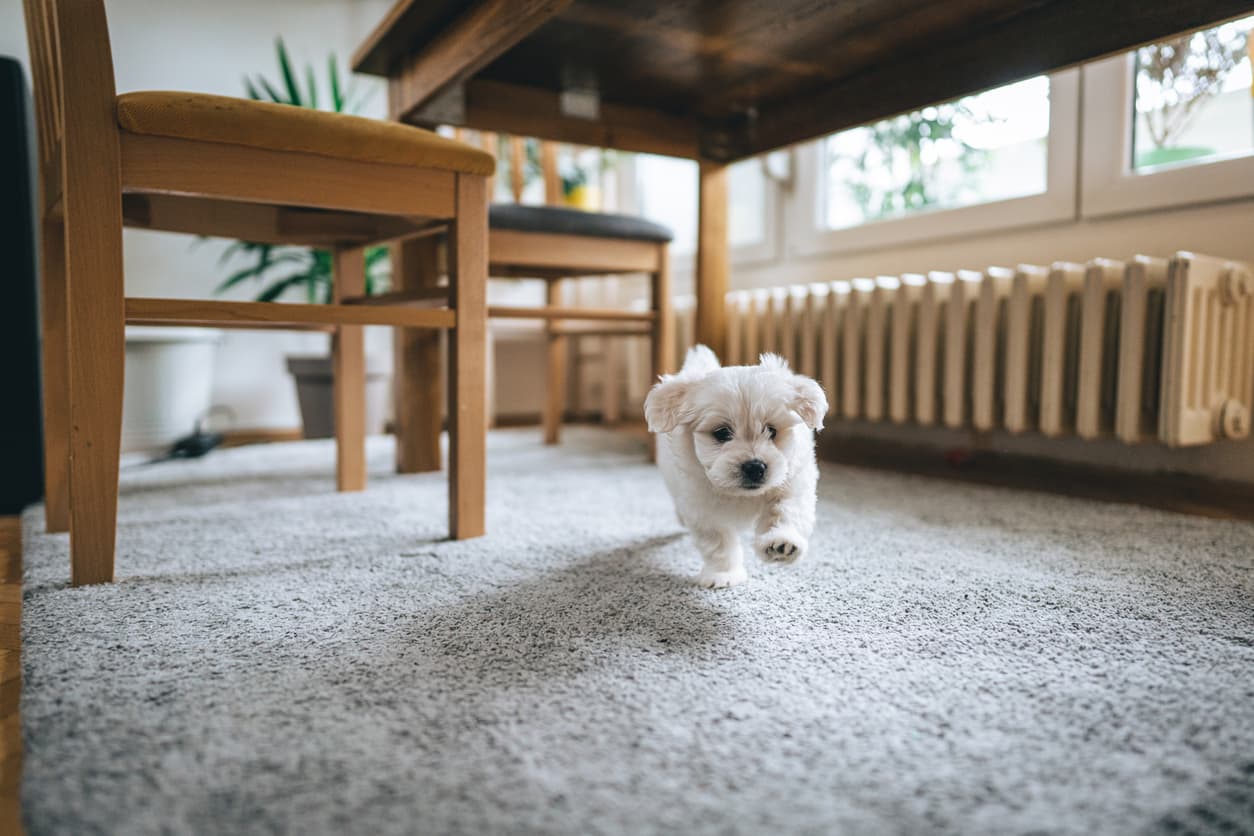
Carpet can still work in homes with pets—but it’s not always the best choice for every room or every household. Understanding the pros and cons helps you decide where carpet makes sense and where a hard surface may perform better.
Pros and Cons of Carpet for Pet Owners
One of carpet’s biggest advantages is comfort. It provides a soft, warm surface for pets to lie on and helps reduce noise from running and playing. Carpet also offers better traction than hard floors, which can be easier on older pets’ joints.
On the downside, carpet is more vulnerable to pet hair, accidents, and odors. It requires frequent vacuuming and deeper cleaning to stay fresh, and repeated moisture exposure can shorten its lifespan if the padding underneath isn’t properly protected.
When Carpet Makes Sense — and When It Doesn’t
Carpet is often a good choice for bedrooms, upstairs areas, and low-traffic living spaces, especially when pets are well-trained. In contrast, rooms where accidents are more likely—such as entryways, basements, or areas with outdoor access—tend to perform better with waterproof flooring.
Choosing carpet selectively, rather than throughout the entire home, is often the smartest approach for pet owners.
Carpet vs. Hard Flooring for Pet Households
Hard flooring options like luxury vinyl, tile, or laminate are easier to clean and handle accidents better, but they can feel colder and noisier. Carpet offers comfort and quiet but requires more maintenance.
Many pet-friendly homes strike the right balance by combining hard flooring in high-risk areas with carpet in comfort-focused spaces. A flooring professional can help you decide which rooms benefit most from each option based on your pets, lifestyle, and long-term plans.

Best Carpet Fibers for Pets
When choosing carpet for a home with pets, fiber type matters just as much as style or color. The right carpet fiber can handle claws, resist stains, and make cleanup far easier—while the wrong one can show wear and odors quickly.
Nylon vs. Polyester vs. Olefin
Nylon is widely considered the best all-around carpet fiber for pets. It’s highly durable, resilient under heavy traffic, and resists matting from claws and daily movement. Nylon also responds well to stain treatments, making it a reliable long-term choice for pet owners.
Polyester is naturally stain-resistant and often more budget-friendly. However, it’s softer and less resilient than nylon, meaning it can flatten or show wear faster in active pet households.
Olefin (polypropylene) resists moisture and staining well, but it lacks durability. It tends to crush easily and can show wear patterns quickly, making it better suited for low-traffic areas rather than busy homes with pets.
Why Stain-Resistant and Solution-Dyed Fibers Matter
For pet owners, solution-dyed fibers are a major upgrade. Because color is added during fiber production—not after—these carpets resist staining, fading, and discoloration far better than traditionally dyed options. When accidents happen, solution-dyed carpets are easier to clean and less likely to retain odors.
Built-in stain resistance (not just surface coatings) also helps carpets perform better over time, especially in homes with frequent spills or pet accidents.
Carpet Fibers Pet Owners Should Avoid
Pet owners should generally avoid:
Low-density polyester carpets that flatten quickly
Wool carpets, which absorb moisture and stain easily
Delicate or ultra-soft fibers designed for luxury rather than durability
These options may look great initially but often struggle to hold up to real life with pets.
Carpet Fiber Comparison for Pet-Friendly Homes
| Carpet Fiber | Durability with Pets | Stain Resistance | Odor Resistance | Maintenance Level | Best For Pet Homes |
|---|---|---|---|---|---|
| Nylon | ✅ Excellent | ✅ Very Good | ⚠️ Good | ⚠️ Moderate | Active dogs, multiple pets |
| Solution-Dyed Nylon | ✅ Excellent | ✅ Excellent | ✅ Very Good | ✅ Easy | Best overall pet choice |
| Polyester | ⚠️ Moderate | ✅ Good | ⚠️ Moderate | ⚠️ Moderate | Calm pets, lighter traffic |
| Olefin (Polypropylene) | ❌ Low | ✅ Good | ⚠️ Moderate | ⚠️ Moderate | Low-traffic areas only |
| Wool | ❌ Low | ❌ Poor | ❌ Poor | ❌ High | ❌ Not recommended |

Cost Considerations — Pet-Friendly Carpet vs. Standard Carpet
Cost is an important factor when choosing carpet for a home with pets, but focusing only on the upfront price can lead to higher expenses down the road. Pet-friendly carpet is designed to resist stains, odors, and wear, which often translates into better long-term value compared to standard carpet options.
Average Cost Differences for Pet-Rated Carpets
Standard carpet typically costs less upfront, but pet-friendly carpet—made with stain-resistant, solution-dyed fibers—usually runs slightly higher per square foot. That price increase reflects better durability, easier cleanup, and improved resistance to pet accidents and odors.
Padding and Installation Upgrades to Budget For
Pet households benefit greatly from moisture-resistant or spill-blocking carpet padding, which helps prevent accidents from soaking into the subfloor. While this padding costs more than basic foam, it can dramatically extend the life of your carpet. Professional installation is also crucial, as proper stretching and seam sealing reduce wear and odor retention over time.
Long-Term Replacement Costs
Standard carpet in homes with pets often needs replacement every 5–7 years, especially in high-traffic areas. Pet-friendly carpet, paired with the right padding and maintenance routine, can last 8–12 years or longer, reducing how often you’ll need to replace it. Over time, that durability can offset the higher initial investment and save money overall.
Pet-Friendly Carpet vs. Standard Carpet: Cost Comparison Table
| Carpet Type | Material Cost (Per Sq. Ft.) | Padding Cost (Per Sq. Ft.) | Average Lifespan (Pet Homes) | Odor & Stain Protection | Long-Term Value |
|---|---|---|---|---|---|
| Standard Carpet | $2 – $4 | $0.50 – $1 | 5–7 years | ❌ Low | ⚠️ Moderate |
| Mid-Grade Carpet | $3 – $5 | $0.75 – $1.50 | 6–9 years | ⚠️ Moderate | ⚠️ Moderate |
| Pet-Friendly Carpet | $4 – $6 | $1 – $2 (moisture-resistant) | 8–12 years | ✅ High | ✅ High |
| Premium Pet-Proof Carpet | $5 – $7+ | $1.50 – $2.50 | 10–15 years | ✅ Very High | ✅ Very High |
Thinking about new carpet that actually works with your pets—not against them? Our flooring experts can help you choose the best pet-friendly carpet options for your home, lifestyle, and budget. Schedule a free in-home estimate today to see samples, compare pricing, and get professional guidance tailored to you and your furry family members.